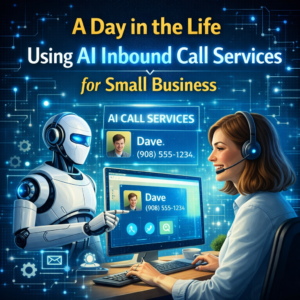
A Day in the Life Using AI Inbound Call Services: How Small Businesses Win Time Back
It’s 7:15 AM in New Jersey, and Tim, owner of a small but busy HVAC company, is already sipping his coffee while checking the weather forecast for the day’s jobs. He’s not yet in “work mode,” but his phone is. Thanks to AI inbound call services, his business line is already active, answering calls, logging messages, and even booking appointments without him lifting a finger.
Tim used to dread mornings. His phone would light up with missed calls and voicemails left overnight. By the time he returned them, most callers had already moved on or booked elsewhere. But now, his AI system answers every call, 24/7, with a warm, human-sounding voice. It handles routine inquiries, routes urgent issues to his phone, and schedules non-urgent requests directly into his calendar.
While Tim finishes his coffee, his AI call service has already:
Answered five early-morning inquiries
Booked two appointments
Texted appointment confirmations to customers
Logged all activity in his CRM
This kind of automation has changed the way Tim runs his business. And he’s not alone.
AI inbound call services aren’t just for big corporations anymore. They’ve become an affordable, practical solution for small businesses—especially service-based ones like Tim’s, where every missed call could mean lost revenue. Whether you run a med spa, dental office, home repair business, or retail shop, the same scenario plays out: more calls than time to answer them.
By 9:00 AM, Tim is on-site at a customer’s home. He’s in the process of finishing installing a new ventilation system when his phone buzzes. Not with a call but with a text update from his AI system. A new customer just called asking for a same-day appointment. The AI receptionist answered, asked qualifying questions, and slotted the job into his calendar availability block for later that afternoon. Tim smiles. No back-and-forth. No missed revenue.
Meanwhile, another call came in asking about pricing. His AI receptionist handled it. A repeat client wanted to confirm their appointment time. The AI receptionist confirmed it. Tim doesn’t stop what he’s doing, doesn’t pull off his gloves, and doesn’t worry about who he might be losing to voicemail. His AI receptionist is handling the front office while he focuses on his actual work.
At noon, Tim takes a quick break and glances at his dashboard. It shows six new appointments, 14 answered calls, three voicemails (flagged as non-urgent), and one customer flagged for a follow-up because their issue didn’t fit the standard flow. That one call? His AI receptionist forwarded it to his office inbox with a transcript and notes so it can be handled in person when he’s free.
After lunch, Tim visits his second job of the day. While he’s in the crawl space under a home in Scotch Plains, the AI receptionist is still working. It’s talking to a customer who’s asking about whether he services the Watchung area. AI receptionists confirm yes, explain the average ETA, and offer to schedule for next week. By the time Tim resurfaces, the job is booked, and he’s already earned another future customer.
Let’s talk about the customer experience and the AI inbound call services
Most clients don’t care if they’re talking to a human as long as they get what they need, fast. AI inbound call services use natural language processing, which means the voice on the other end sounds natural, conversational, and capable. It doesn’t feel like a robot, it feels like a helpful team member. And unlike humans, it never forgets to follow up, misplaces a note, or has a bad day.
Tim wraps up his third job around 4:30 PM. Normally, this would be the start of his second shift, calling people back, checking voicemails, and confirming tomorrow’s schedule. But not today. Everything’s already handled.
He gets home, grabs a beer, and around 7 PM, checks in one last time. There’s one flagged voicemail that requires his input, a unique request regarding the installation of ductless systems. The AI receptionist didn’t have a clear answer, so it sent the information directly to Tim’s phone with a transcript and recommended a follow-up. He calls the customer back personally, thanks them for reaching out, and sets a consultation for later in the week. That’s the human touch AI never replaces, just enhances it.
By 9 PM, Tim’s business has handled over 20 calls. He didn’t miss a single one. Appointments were booked, customers were helped, follow-ups were initiated, and no work was sacrificed in the process. His AI call system never needed a break, never got tired, and never forgot to follow up.
This is what AI inbound call services are doing for small businesses across New Jersey. They’re more than just fancy voicemail systems. They’re intelligent, responsive tools that handle real-time communication with professionalism and consistency. They help business owners stay on top of their work without losing their minds or their evenings.
The beauty of it is that the setup wasn’t expensive for Tim’s business. In Tim’s case, his consultant Scott had the system live within 3 days, fully customized to his workflow, services, and tone. From that point on, it worked silently in the background, saving time, protecting leads, and delivering better service.
As we move into a more competitive, fast-paced future, AI inbound call services are no longer a luxury. They’re the new standard for how smart businesses communicate. And for people like Tim, it’s not about replacing humans; it’s about reclaiming hours, delivering better service, and never letting opportunities go to the competition.