AI Automation for Restaurants Is Quietly Deciding Which Places Survive
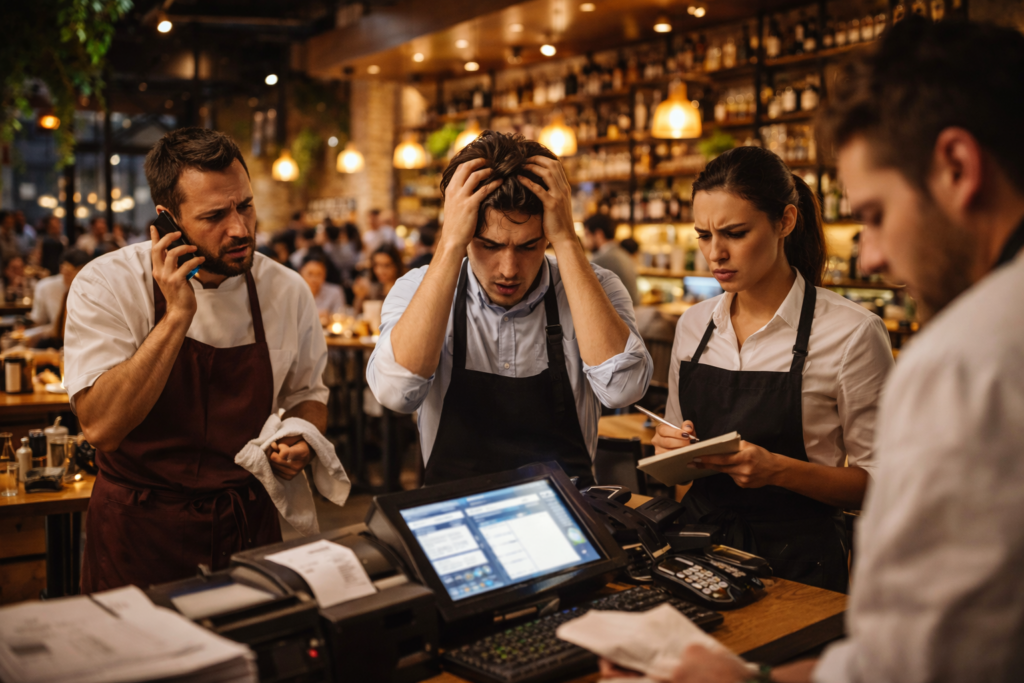
At 6:07 p.m., the phone starts ringing again.
Not once. Not twice. Over and over. The sound blends into the kitchen noise until no one can tell where it’s coming from. The host glances at it, then at the line forming at the door, then back at the POS screen flashing red. Nobody answers. Nobody can.
This is not laziness. This is reality. And this exact moment is why AI automation for restaurants exists.
Restaurants don’t fail because the food is bad. Most restaurants fail because the operation breaks under pressure. Pressure doesn’t show up as one big disaster. It shows up as missed calls, forgotten callbacks, delayed orders, annoyed customers, and staff making judgment calls in chaos.
The phone ringing during dinner service is not a small problem. It is a structural problem.
Owners know this, but somehow they normalize it over time. They tell themselves everyone is busy, everyone understands, and people will call back. Most don’t. They move on to the next restaurant that answers. AI automation for restaurants was built around this behavior, not around ideal conditions that never exist in a real kitchen.
Restaurants Don’t Have a Phone Problem, They Have a Timing Problem
If the phone rang at 3 p.m., someone would answer it. If it rang at 9:30 p.m., someone might answer it. The problem is the window in between, when everything is happening at once.
Dinner rush is when the phone rings the most and gets answered the least. That is not a coincidence. That is when customers want reservations, takeout, wait times, delivery updates, and menu questions. That is also when staff physically cannot step away.
So calls go unanswered. Voicemails pile up. Orders get lost. Customers feel ignored.
AI automation for restaurants exists to handle communication when humans can’t, without forcing staff to choose between service and phones.
SmartCallz answers calls instantly, during the exact moments restaurants traditionally drop the ball. Not with a menu tree. Not with robotic prompts. With conversational handling designed specifically for restaurant scenarios. Customers get information. Orders get captured. Staff keep moving.
What Actually Happens When Restaurants Don’t Answer the Phone
Most restaurant owners underestimate the damage of one missed call. It’s not just that one order. It’s the behavior it trains.
A customer who calls and doesn’t get an answer learns not to call again. Next time, they order elsewhere. Or they leave a review saying “could never get through.” Or they assume the restaurant doesn’t care.
Multiply that by hundreds of calls over a year.
AI automation for restaurants stops that training cycle. Every call is acknowledged. Every caller gets clarity. Even when the kitchen is slammed, the business still feels responsive.
Responsiveness is not customer service fluff. It is a competitive advantage.
How SmartCallz Fits Into a Real Restaurant, Not a Perfect One
SmartCallz was not built for restaurants with excess staff and empty dining rooms. It was built for places where the margin for error is thin and the workload is heavy.
AI automation for restaurants through SmartCallz handles:
Calls during peak service
After-hours inquiries
Takeout orders
Basic reservation requests
Wait-time questions
Menu and hours information
Not by replacing staff, but by absorbing the interruptions that break flow. That flow matters. When service is interrupted, mistakes increase. Tickets get missed. Food quality slips. Tension rises.
SmartCallz removes one major source of interruption without adding new tasks.
Why Takeout and Delivery Are the Hidden Breaking Point
Takeout sounds simple until it isn’t.
Phones are ringing while orders are being packed. Staff repeating themselves over the kitchen noise. Customers are calling back asking where their food is. Orders misheard. Timing mismanaged. AI automation for restaurants changes how takeout is handled. Calls are answered calmly. Orders are captured clearly. Expectations are set accurately.
Customers are less frustrated when they know what to expect. Staff are less stressed when they don’t have to juggle phones and food at the same time.
This is not about scaling. This is about survival during rushes.
The After-Hours Calls Restaurants Never See
Restaurants close their doors, but customers don’t stop calling. Catering requests. Large orders. Event questions. Someone checking hours for the next day.
Those calls usually go unanswered. They disappear. AI automation for restaurants ensures those calls are captured, logged, and ready to be acted on later. No staff involvement. No missed opportunity. Owners finally see how much business was happening outside operating hours.
Staffing Isn’t the Fix Everyone Thinks It Is
Hiring someone just to answer phones sounds logical until you do the math. Wages. Training. Turnover. Scheduling. One more person in an already crowded space.
AI automation for restaurants reduces the need to staff for phones specifically. Staff focus on guests in front of them. The phone is handled elsewhere. This doesn’t remove jobs. It removes friction.
Consistency Is What Customers Actually Notice
A customer calls at noon and gets an answer. Calls again at 7 p.m. and gets voicemail. Same restaurant. Two completely different experiences.
That inconsistency damages trust.
AI automation for restaurants makes the experience consistent regardless of time or chaos level. The restaurant sounds professional even when it’s overwhelmed. Consistency is what earns repeat business.
Reviews Are Often About Communication, Not Food
Read enough restaurant reviews and patterns emerge. “Couldn’t get through.” “Never answered the phone.” “Hard to place an order.”
These reviews hurt rankings. They hurt perception. They hurt revenue. AI automation for restaurants reduces these complaints by ensuring customers never feel ignored. Calls are answered. Information is clear. Follow-ups happen.
Reputation improves quietly over time.
Why Restaurants That Add Automation Feel Calmer
One of the first things owners notice after implementing SmartCallz is not revenue. It’s calm.
The phone rings, and nobody panics. Nobody yells for someone to grab it. Nobody argues about who should answer. That calm improves everything downstream.
Calm kitchens make better food. Calm staff give better service. Calm owners make better decisions. AI automation for restaurants is not about speed. It’s about stability.
This Is Not About Technology, It’s About Behavior
Restaurants operate under pressure. Systems that assume ideal behavior fail immediately.
SmartCallz assumes chaos. It assumes interruptions. It assumes staff are busy. It assumes customers are impatient.
Then it builds around those assumptions.
That is why AI automation for restaurants works when other tools don’t.
Restaurants Lose Money in Silence
Missed calls don’t scream. They whisper. They disappear. They never show up on reports. AI automation for restaurants turns silence into data. Calls become captured. Intent becomes visible. Owners finally see what was slipping away. That visibility changes how decisions are made.
SmartCallz Doesn’t Make Restaurants Better, It Removes What Makes Them Worse
It doesn’t change food. It doesn’t change recipes. It doesn’t change culture.
It removes missed calls. It removes communication breakdowns. It removes unnecessary stress. That is enough to change outcomes.