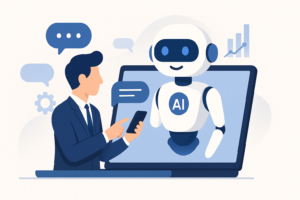
In today’s rapidly evolving digital landscape, the implementation of a conversational AI chatbot for businesses has become a vital strategy for enhancing customer engagement and improving operational efficiencies. As companies seek to streamline their communication, these intelligent systems offer innovative solutions that cater to both consumer preferences and business needs. In this blog post, we will explore what conversational AI chatbots are, how they operate, their benefits, real-world use cases, implementation tips, and future trends.
What is a conversational AI chatbot for businesses?
A conversational AI chatbot for businesses is an advanced software application designed to simulate human conversations through voice or text interactions. Leveraging natural language processing (NLP) and machine learning, these chatbots can understand and respond to customer inquiries in real time. Unlike traditional chatbots that follow predefined scripts, cnversational AI chatbots learn from interactions, continuously improving their responses based on user input.
Types of conversational AI chatbots
There are generally two types of chatbots used in business environments:
- Rule-based chatbots: These rely on preset rules and scripts. They are efficient for frequently asked questions but lack the ability to learn from interactions.
- AI-driven chatbots: These utilize machine learning and NLP to understand context and nuances in conversation, allowing for more dynamic interactions.
How it works
The functionality of a conversational AI chatbot for businesses is grounded in sophisticated technologies. Initially, these chatbots utilize data input and training to understand language patterns. Once trained, they can interpret customer queries, extracting essential keywords and context.
When a user initiates a conversation, the chatbot analyzes the input and generates a response based on its understanding of the context. Over time, the chatbot learns from interactions, refining its ability to provide better service and more accurate responses.
Core components of conversational AI
Key components that contribute to the effectiveness of conversational AI chatbots include:
- Natural Language Understanding (NLU): Allows chatbots to comprehend user intent and extract relevant information.
- Machine Learning: Enables chatbots to learn from each interaction and improve over time.
- Integration Capabilities: Allows chatbots to connect with other business systems, such as customer relationship management (CRM) software.
Key benefits for businesses
Investing in a conversational AI chatbot offers several advantages for businesses:
- 24/7 Availability: Chatbots operate around the clock, providing instant responses to customer inquiries at any time.
- Cost-Effectiveness: Automating customer interactions reduces the need for extensive customer support teams, thereby lowering operational costs.
- Enhanced Customer Engagement: By providing quick responses and personalized interactions, chatbots improve overall customer satisfaction.
- Scalability: Chatbots can handle multiple conversations simultaneously, making them ideal for businesses experiencing rapid growth.
Real-world use cases
Across various industries, businesses have successfully integrated conversational AI chatbots into their operations. Some notable examples include:
- E-commerce: Retailers use chatbots to assist customers with product recommendations, order tracking, and handling returns.
- Healthcare: Chatbots facilitate appointment scheduling, provide medication reminders, and answer frequently asked questions about services.
- Financial Services: Banks deploy chatbots to help customers with account inquiries, transaction history, and financial planning advice.
Implementation tips
To maximize the impact of a conversational AI chatbot for businesses, consider the following strategies for effective implementation:
- Identify specific use cases: Determine which areas of your business would benefit most from chatbot integration.
- Focus on user experience: Ensure the chatbot provides a friendly and easy-to-navigate interface to enhance user satisfaction.
- Continuously train your chatbot: Regularly update the chatbot’s knowledge base to reflect changing business offerings and customer needs.
- Monitor performance: Analyze customer interactions to assess the chatbot’s performance and make improvements where necessary.
Future trends
The future of conversational AI chatbots for businesses looks promising as technology continues to evolve. Key trends to watch for include:
- Improved NLP Capabilities: Ongoing advancements in natural language processing will enhance chatbots’ understanding of complex queries.
- Voice-activated Assistants: The integration of voice recognition technology will enable more users to interact via voice commands.
- Increased Personalization: Future chatbots will leverage data analytics to provide tailored experiences for individual users based on their history and preferences.
Conclusion
Implementing a conversational AI chatbot for businesses is no longer a luxury but a necessity in today’s competitive landscape. By enhancing customer engagement, providing instant support, and streamlining business operations, these chatbots are proving to be invaluable tools for organizations across all sectors. As technology continues to advance, businesses that embrace conversational AI will be well-positioned to meet the evolving needs of their customers and thrive in the digital age.
For more insights on conversational AI trends and innovations, consider reading resources from Forbes and AI Consulting in NJ: Why Local Expertise Matters.
Discover how your business can benefit from advanced conversational AI solutions by exploring more on our website and connecting with our experts.